
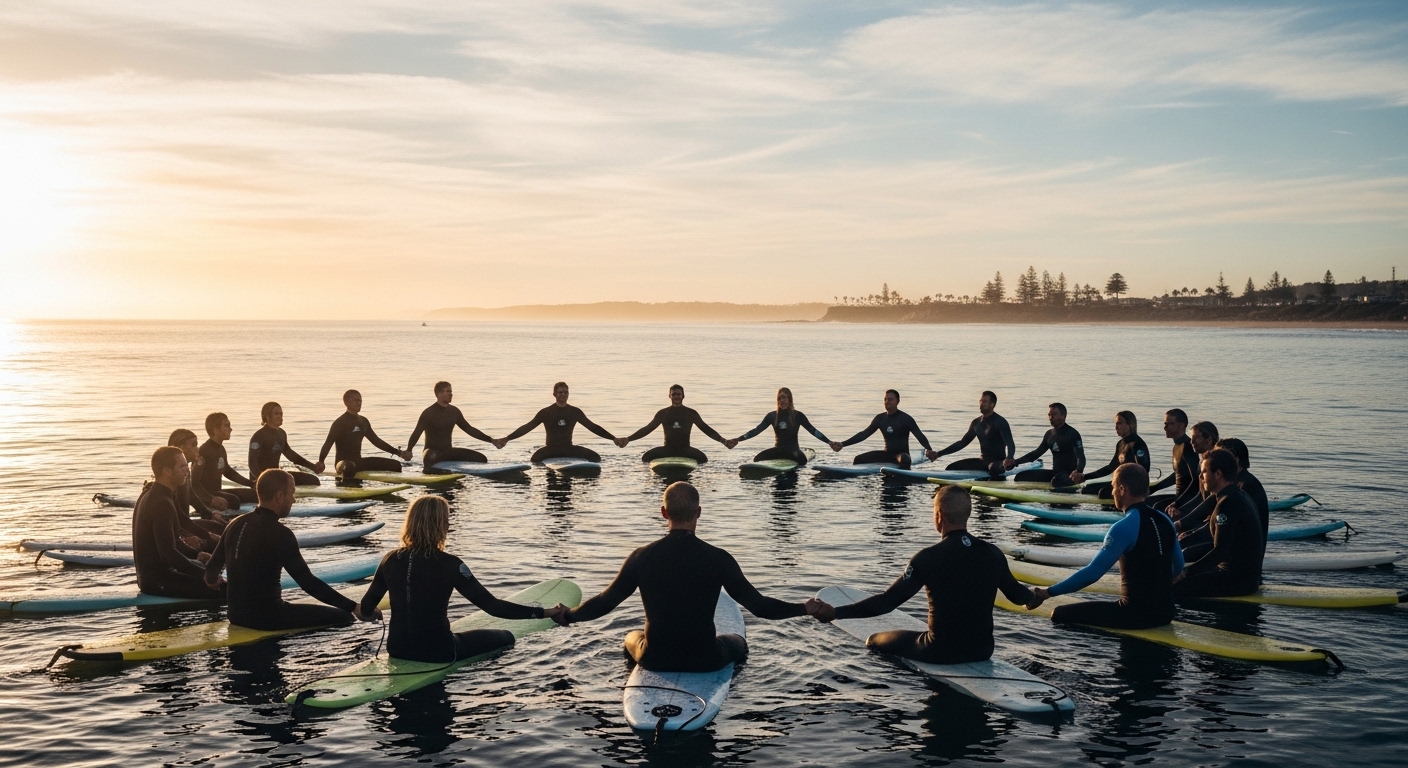
Leaving the land behind and paddling towards the horizon brings about a deep, subtle healing. Those whose lives were shaped by the tides may find a conventional chapel service a bit too static. For this reason, surfers and ocean enthusiasts all around the world have turned paddle out memorials into the pinnacle of tributes.
These floating ceremonies are more than simply a “surfer’s funeral.” They are a means to restore a loved one to the water where they loved most while also celebrating a last, collective ride. Whether you are organising a memorial for a long-time waterman or this is your first ceremony, it is important to know the history, customs, and logistics of a paddle out so that you can say goodbye with dignity and impact.
What is a paddle out and why is it important to the ritual?
What precisely is a paddle out funeral, if you’re not familiar with surf culture? This floating memorial service is essentially a spiritual ceremony. On surfboards, longboards, or kayaks, the participants paddle out past the breaking waves and then sit in a big circle on the water.
Despite its roots as a “surfer’s funeral,” today’s ocean funeral ceremony rites welcome a far wider range of participants. No one can be honoured in this manner unless they are a professional athlete. An appropriate remembrance would be a paddle out, regardless of whether the deceased was an avid surfer, swimmer, or beach bum. The emphasis is on the interdependence of humans, their built environment, and the natural world, providing an experience of shared purpose that is difficult to achieve on dry land.
Quick Background: When Was This Practice First Started?
Modern paddle out memorials have deep historical origins in Hawaiian surf culture of the twentieth century. Although ancient Polynesians had strong spiritual connections to the ocean, it was the Waikiki Beach Boys of the early 1900s that popularised the particular “circle” shape.
Duke Kahanamoku and other legendary watermen helped establish this ceremony as the pinnacle of respect. The tradition spread from the islands to the shores of Australia and California throughout the years, becoming a sign of the worldwide surfing community. One method to honour a loved one’s return to the natural world is with an ocean funeral ceremony ritual, which is now practiced all around the world.
Ceremony Planning: How to do a paddle out
Dealing with the details after a loved one’s death can be difficult. Learning how to do a paddle out technique is an amalgam of maritime knowledge and event preparation.
- Place Your Bet: To honour the departed, pick a special spot, like a beach the family frequented often or the deceased’s favourite surf spot.
- Timing: You can’t control the weather, unlike in a chapel service, so timing is crucial. See what the tides, wave height, and wind predictions are. A peaceful, overcast morning is typically perfect for solitude and contemplation.
- Communication: Disseminate information via social media and neighbourhood surf shops.
- Equity: Keep in mind that not all people are able to paddle a kayak. To ensure that non-surfers or elderly family members may witness the ocean funeral ceremony firsthand, arrange for a small boat or outrigger canoe to transport them to the circle.
Planned Activities: Following Proper Protocol and the “Order of Service”
After paddling past the surf zone, a designated leader will gather the rest of the party into a circular formation. By physically connecting their hands over the water, participants become a unified whole. Common elements of the ritual include:
- A brief period of quiet reflection.
- The reading of poetry, prayers, or anecdotes.
- The Final Act: Tossing a biodegradable leis or flowers into the middle of the circle.
- Celebration of Life: A high-energy show where people splatter water into the air while hooting and whistling. Before riding one last wave back to shore as a group, this joyful sound represents the vitality of the deceased.
Please bring an attitude of respect and whatever water attire makes you most comfortable (usually a wetsuit or boardshorts) if you plan on attending.
Dispersing Debris and the Need for Eco-Friendly Practices
Incorporating the dispersal of remains into paddle out memorials is a common choice among many families. There are a few logistical considerations to bear in mind while you prepare this. The Environmental Protection Agency mandates that dispersal occur at least three nautical miles offshore for legal purposes, but several local communities have their own customs.
- Containment: Avoid having the ashes swept away by the wind by storing them in biodegradable urns or “scattering tubes” for a more dignified disposal.
- Symbolism: An act of profound symbolism, it signifies the individual’s ultimate merging with the ocean.
- Environmental Impact: In order to preserve the aquatic environment during an ocean funeral ceremony, it is imperative that any floral tributes be all-natural and devoid of plastic ribbons and flower foam.
Paddle out mastery is about more than simply the mechanics; it’s also about making room for loss to meet the grandeur of the water. Anyone curious about the meaning of a what is a paddle out funeral can rest assured that it is simply a nice farewell trip home.
FAQs
1. Can I legally throw ashes into the water while paddleboarding?
Sure, but there are some hard and fast laws to adhere to. Federal regulations (such as the EPA’s MPRSA) mandate a minimum distance of three nautical miles from the beach for the scattering of ashes in certain regions, including the United States and Australia. It is vital to check local council or state restrictions. Refrain from disposing of plastic or metal urns in the water and instead utilise containers that can be broken down by nature.
2. Can someone without surfing skills participate in a paddle out?
Absolutely not. Originally started by surfers, paddle out memorials are now celebrated in honour of all those who have served in the maritime industry, including lifeguards, swimmers, divers, and surfers. Anyone can join in the fun in a kayak, stand-up paddleboard, rented boat, or outrigger canoe if they don’t surf.
3. What are the rules of conduct for a paddle out ceremony?
Once the circle is formed, the most crucial guideline is to respect each other and remain silent. Maintaining a tight and visible circle requires you to remain sitting on your board while paddling out. Before you share your personal memories, wait for the appointed leader or family member to speak. At the conclusion of the ritual, everyone is asked to join in the customary “hoot and splash” a joyful celebration of life.
4. Can those who don’t surf be able to view the ceremony from the shore?
Sure thing. An integral part of many paddle-outs is the “shore-side” segment. It is common practice to congregate along the shore or on a neighbouring pier for relatives who are unable to paddle out. A lovely visual connection between land and sea is created when beachgoers toss flowers into the shore-break at the same time as surfers release theirs in the circle.
5. What kinds of flowers work best for memorials overlooking the ocean?
Use only natural, biodegradable flowers to safeguard marine life. Traditional Hawaiian leis feature actual flowers, such as plumeria or orchids. Use only petals that have not been treated with harsh chemicals or dyes. Before dropping them into the water, make sure they are free of any flowery foam, plastic strings, or rubber bands.